

Editor’s note: This piece was co-written by Bree Doldron, National Organizer at Open Primaries, and Nate Roseboro, Chair of the Forward Party’s Black Voters Committee.
This is the year of our midterm primaries, with hundreds of elections unfolding across the country that will shape our future. Yet, beneath the surface of these contests lies a staggering reality: 20 million unaffiliated voters are currently barred from participating in the very elections that determine their representation.
The political establishment remains fixated on a rigid "Red vs. Blue" map, even as the ground shifts beneath them. Today, 45% of Americans identify as unaffiliated, dwarfing the 27% who identify as either Democrats or Republicans. Voters are leaving the two-party system in droves, not to become "leaners" (whatever that even means); but to step beyond a restrictive binary that no longer serves them.
Despite this, in 16 closed primary states, choosing independence means being stripped of your right to vote when it matters most. This restrictive system does more than just exclude voters; it directly fuels the polarization and extremism undermining our democracy.
As we approach Juneteenth, a holiday deeply rooted in the unyielding pursuit of freedom and self-determination, this national rejection of the partisan status quo takes on an even more profound meaning – an opportunity to re-examine what an inheritance of civil rights looks like today.
There is a massive, yet quiet shift happening right under our feet regarding party allegiance, and it looks fundamentally different than it did during the civil rights movement. During that era, Black political power became heavily anchored in party identity, with roughly 90% of the generation aligning with the Democratic Party.
Today, however, a striking 30% of younger Black voters identify as independent.
When an entire emerging generation of voters enters the political arena and explicitly chooses not to align with either major party, it forces us to grapple with a new reality. The outdated political strategy of championing the Black vote purely through a single partisan lens is losing its relevance.
Right now, the broader civil rights movement is navigating a period of friction and transition. But this institutional chaos presents a historic opportunity to re-tool. What does it mean to advance a modern voting rights agenda when people aren't just switching from one party to another, but rejecting the parties entirely? It means party loyalty can no longer be treated as a given; it is something that must be earned. If we want to address the cutting-edge voting rights issues of our time, the systematic exclusion of African American independents from the primary process must become a part of the conversation.
A System That Leaves Millions Behind
This primary problem is a critical voting rights issue that disproportionately impacts those who have the most at stake. Gen Z, veterans, and returning citizens are among the groups most harmed by closed systems that demand partisan loyalty as the price of admission.
These voters are not a monolith, yet the political establishment continues to treat them like one, revealing a massive gap in our nation’s political strategy. There is an urgent need for far more research and commitment to truly understand who Black independent voters are and what they care about.
The data already shows how deeply this closed system impacts communities of color:
- In New York City, 54% of the 1.2 million independent voters (648,000 people) are voters of color.
- In California, after the state adopted nonpartisan open primaries, the number of Latino candidates increased by 50% and the California Legislative Black Caucus grew by 50%.
- In South Carolina, 85% of cities use nonpartisan municipal elections. In these municipal systems, African Americans are represented at levels that directly mirror their percentage of the population. Conversely, in South Carolina cities using partisan voting systems, African-American representation drops by 6%, without a single minority candidate being elected to an at-large seat.
This data suggests that when we dismantle partisan gatekeeping and open up the system, we unlock immediate, reflective representation for historically marginalized communities.
To continue the work of the civil rights leaders who paved the way, we must look beyond the two-party system that is failing because it prioritizes party power over people.
Opening our primaries is one of the most important, yet overlooked, voting rights challenges of our generation. It is time to demand a system that recognizes our identities and our solutions are far too complex for two restrictive boxes. Democracy works best when the door is open to everyone.
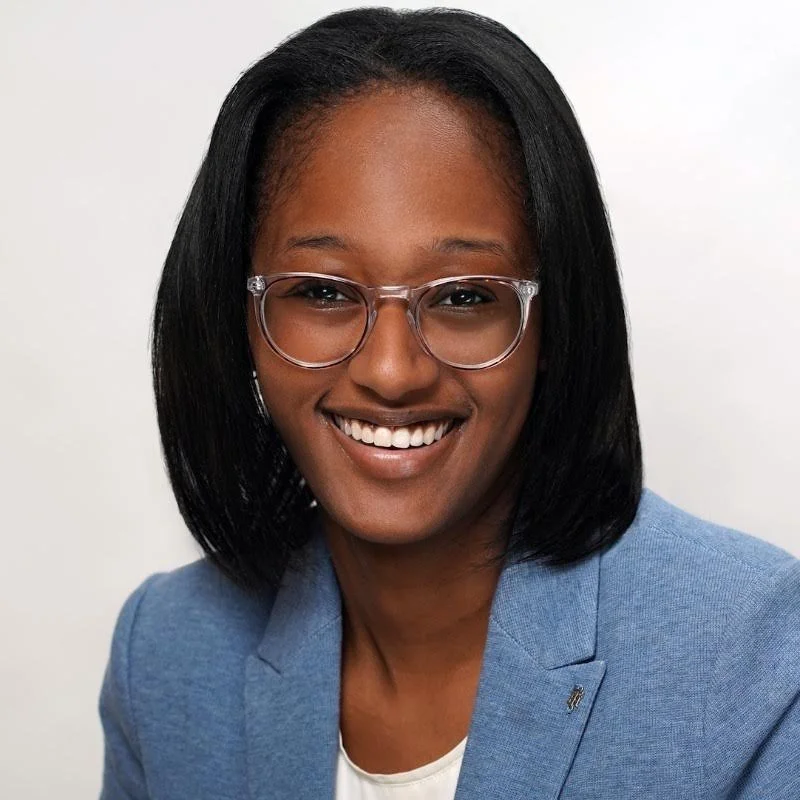
Bree Doldron is the National Organizer at Open Primaries.

Nate Roseboro is Chair of the Forward Party Black Voters Committee.
Do you like this page?